Chapter 4: Stepping Into Freedom

Chapter 4: Christ’s Liberation

Welcome to Chapter 4 of ROW Against the FlowChrist’s Liberation. This week, the focus is on the freedom Jesus offers—not just from habits or circumstances, but into a life truly set free for His purposes and presence.

Chapter Focus: Living in the Liberation of Christ

In this chapter, we explore what it means for Jesus to liberate us:

  • Freedom from shame and guilt: Christ’s grace doesn’t just forgive—it releases us from the weight of the past.
  • Release from spiritual bondage: Where we feel stuck—in sin, fear, cycles of defeat—Jesus’ victory on the cross breaks chains, even those we thought unbreakable.
  • Free to walk as God’s children: Liberation isn’t just from something, but for something—intimacy with God, purpose, hope, and love expressed to others.

Key biblical truths anchor this chapter:

  • “So if the Son sets you free, you will be really free.” (John 8:36, NET)
  • “It is for freedom that Christ has set us free. Stand firm, then, and do not be subject again to the yoke of slavery.” (Galatians 5:1, NET)
  • Jesus declares liberty to captives (see Luke 4:18–19, NET)

You’ll find stories of real change, encouragement for those who feel stuck, and practical steps for embracing freedom—daily practices that keep us returning to the liberator, not bondage.

Conversation Starters

Let’s reflect and share together:

  • Where in your life do you most long for freedom? What has kept you feeling “captive”?
  • When have you experienced Jesus breaking chains—habits, mindsets, fears?
  • How does it challenge or encourage you to see your freedom as both a gift and a calling to serve others?

Share your insights, a story, or a verse that’s meaningful to you. Your journey might encourage someone to claim Christ’s liberation for themselves.

What’s Next?

  • Read ahead: The full book is available as a free PDF, or come back next week for Chapter 5.
  • Invite someone: These chapters are for group or personal study—bring a friend or share thoughts in your community.
  • Stay engaged: Each week, we keep moving toward authentic freedom in Christ—supporting and praying for one another.

Thank you for being part of this journey. May you discover afresh the liberation that only Jesus brings—freedom to walk in truth, love, and joy.

Chapter 4: Christ’s Liberation

As I was growing up, I was one stuck kid. My early years were uneventful enough and church life defined my weekly schedule. My parents loved Jesus and served in the church every time the doors were open. This gave me great exposure to a wonderful community. Of course that wasn’t the only exposure I would receive and when I was about 10 years old a fellow classmate  showed me pornography for the first time. It happened in the backseat as we carpooled to Christian school, of all places. That plus other types of abuse set me off down the pathway of disordered desires. Only in the last decade have I started to see how what had been done to me set me off down that pathway.  

All I knew as a boy and a teenager was that I was stuck. It seemed that no secret behavior was off-limits. I would shoplift so that I could seem generous to my friends. Only the restraining power of God kept me from being an abuser as I worked through all of these patterns of behavior. I would memorize all the verses and could repeat all of the important doctrine based on my years of Christian school and church attendance. The old ladies at church would pat my head and say “what a good little boy” but in my mind I was thinking “as far as you know.” Back in the 80s our Christian school used corporal punishment for people like me. Also I was forced to write the definition of tact so many times on chalkboards and notepads. I swore I would never remember it as I tried to avoid memorizing it while I wrote it over the years. Alas, I do indeed recall that “tact is skillfully saying and doing what is suitable and proper under the existing circumstances.” This actually made me more secretive and more slippery with the truth. 

In my senior year of High School, 1992, I was sitting in an English class and my teacher was disparaging the Bible. He classified it as fairytales and was discouraging us from taking it seriously as literature or history. I was a talker and because of my upbringing I knew better than to let this pass without confronting the errors. I had learned plenty over the years about the reliability of scripture. When I looked around the room I noticed Jeff, the friend who I had spent last class with making up all sorts of rude ways to speak to girls in the Spanish Language. Then I saw Joanna, the girl I had basically propositioned for sex in PE class. Maybe that’s why that guy kicked me in the face. Then I saw my basketball team with whom I was prone to misbehave. After surveying the room, I realized I was not the person to represent Jesus in the classroom. This was another kick in the teeth. I felt God telling me to sit down. Another friend, Jason, shared with the teacher what I wanted to say but he had the right to share. He represented Christ in his daily life not just in this moment.  

That night I lay in my bed and wept about the wreck my life had become. I felt so stuck and despaired that I could ever make good on my Sunday morning promises to God. Those promises would fall flat every Monday morning. 

I cried out to God and said “I don’t have what it takes to be the Christian you want me to be” and I heard back as clear as any other conversation “I never said you had what it takes, this is something I am going to do through you.” 

At that point I just gave my life to Jesus. “You can have it all.” Yes, my life was a mess but he accepted it.  

That summer, I saw the captivity I had been in more clearly than ever and experienced the liberation of Christ more powerfully than ever. There were days that I was witnessing to a coworker using my Spanish language skills and days where I was in a fight with another coworker. God squeezed it all out of my heart and revealed my need for reliance on Him.  Does Jesus have the power to liberate you? 

In the previous chapters, we explored the reality of spiritual warfare and the devastating consequences of humanity’s fall into sin. Now, we turn our attention to the heart of the gospel message: Christ’s liberating work on the cross. This chapter will delve into God’s plan of redemption, the power of Christ’s sacrifice, and what it means to live in the freedom He provides. 

God’s Plan of Redemption 

From the moment of humanity’s fall in the Garden of Eden, God had a plan to restore us to relationship with Him. This plan wasn’t an afterthought or a reaction to our failure. It was a demonstration of His infinite love and mercy. 

For this is the way God loved the world: He gave his one and only Son, so that everyone who believes in him will not perish but have eternal life.For God did not send his Son into the world to condemn the world, but that the world should be saved through him. The one who believes in him is not condemned. The one who does not believe has been condemned already, because he has not believed in the name of the one and only Son of God. — John 3:16-18

This familiar verse encapsulates the heart of God’s redemptive plan. It reveals that: 

  • God’s motivation is love: At the heart of God’s redemptive plan is His boundless love for humanity. Despite our rebellion and sin, God’s love remains constant and unwavering. This love drove Him to pursue us even when we were at our worst, demonstrating a depth of affection that surpasses human understanding. 
  • His plan involved personal sacrifice: God’s plan for our redemption came at an immense cost – the life of His own Son. Jesus willingly left the glory of heaven to take on human flesh, enduring suffering, rejection, and ultimately death on the cross. This supreme act of sacrifice reveals the lengths to which God would go to restore our relationship with Him. 
  • The goal is our salvation and eternal life: God’s redemptive plan aims not just at forgiveness, but at complete restoration and eternal life with Him. Through Christ’s work, we are not only saved from the penalty of sin but are also given the promise of eternal fellowship with God, starting now and extending into eternity. 
  • It’s available to everyone who believes: The beauty of God’s plan is its universal availability. Regardless of our past, our social status, or our perceived worthiness, salvation is offered freely to all who put their faith in Christ. This inclusivity reflects God’s desire for all people to experience His liberating grace. 
  • God’s intention is to save, not condemn: Despite our deserved condemnation, God’s heart is set on our salvation. His approach is not one of harsh judgment, but of merciful redemption. Through Christ, God offers a way out of condemnation and into the freedom of His love and acceptance. 

The Power of Christ’s Sacrifice 

The cross of Christ is the pivotal moment in history where God’s plan of redemption was fulfilled. On the cross, Jesus did more than just die for our sins. He broke the power of sin and death itself. 

Having been buried with him in baptism, you also have been raised with him through your faith in the power of God who raised him from the dead. And even though you were dead in your transgressions and in the uncircumcision of your flesh, he nevertheless made you alive with him, having forgiven all your transgressions. He has destroyed what was against us, a certificate of indebtedness expressed in decrees opposed to us. He has taken it away by nailing it to the cross. Disarming the rulers and authorities, he has made a public disgrace of them, triumphing over them by the cross. — Colossians 2:12-15 

Let’s expand on what Christ accomplished: 

  • He brought us from death to life: Through His sacrifice, Jesus restored our spiritual vitality. We were once spiritually dead due to sin, but Christ’s work on the cross breathed new life into us, enabling us to have a living relationship with God.  
  • He forgave ALL our sins: Christ’s atonement covers every sin – past, present, and future. This complete forgiveness frees us from the burden of guilt and shame, allowing us to approach God with confidence. 
  • He canceled the record of charges against us: Jesus erased the debt of sin that stood against us. Like a legal document listing our transgressions, this record was nailed to the cross, symbolically demonstrating that our sins have been fully paid for. 
  • He disarmed the spiritual powers and authorities: Christ’s victory on the cross stripped the enemy of their power over believers. While these forces still exist, they no longer have authority over those who are in Christ. 
  • He triumphed over them publicly: Jesus’ resurrection was a public declaration of His victory over sin, death, and the forces of darkness. This triumph was not hidden but displayed openly, demonstrating God’s power and the effectiveness of Christ’s sacrifice. 

Let’s Pause. 

Is Christ’s sacrifice effective for you? Does King Jesus have your allegiance? 

If so, this total and complete victory means that the enemy has been defeated, disarmed, and publicly humiliated. If Jesus has your believing loyalty, you can now live in the freedom and authority that Christ has won for you. 

The enemy has no power over you that you do not give back to him. 

Read that again. How does that happen? In a word, sin. He gets power back when you give it to him.

We often wander back to the foot of the Cross where all the broken chains are. We’ve been set free but we are back again fitting ourselves for the most comfortable shackles. After all, they fit right over the scars that were there from before. In chapter 8, we will look at breaking agreements with the enemy of our souls that keep us slipping back into these shackles.

Asymmetrical Warfare 

It seems that the enemy of our souls had his teeth knocked out at the cross and resurrection event, but just like in modern warfare it’s not always a frontal assault that takes us down. I believe there is a whisper campaign that continues to derail God’s people. Even Christian leaders, or should I say especially Christian leaders, are at risk.  

In 30 years of ministry, I’ve had this idea that the enemy doesn’t care how influential a Christian leader gets as long as the devil has a hook in them to take as many people down as possible. It’s not like I want to spend a lot of time in the devil’s way of thinking but if he has the key to take me down whenever he wants to, then I shouldn’t trust the lack of frontal assault as terms of peace. Just because I experience success even in ministry does not mean that I’m living right. In these same 30 years I’ve watched the fall of hundreds of “successful” ministry leaders and I want to get all the hooks out of me I can. That’s why we’re ROWing. 

If I am in Christ, I am safe, I am saved. That being said, I’ve got to process the whispers and capture the thoughts running through my head and make them obedient to Christ and the gospel. Keep the broken chains broken. 

for the weapons of our warfare are not human weapons, but are made powerful by God for tearing down strongholds. We tear down arguments and every arrogant obstacle that is raised up against the knowledge of God, and we take every thought captive to make it obey Christ. – 2 Corinthians 10:4-5 

Living in the Freedom Christ Provides 

So what does this mean for us in our daily lives? How do we live in the freedom Christ has won for us? I’ve wandered to the foot of the cross plenty over the years. It’s been 32 years of walking with Jesus but I still fit myself for old chains every once in a while. I don’t do the shame spiral or slap myself on the wrist. You say, “What no shame spiral, no whirlpool, well, maybe Aaron you’re not even sorry.” I just confess, agree that it was sin, and thank Jesus for forgiveness. I don’t want the enemy to have access to me. Do you? 

Here’s a test on whether you know 1 John 1:9. See if I get this right. “If we confess our sins and grovel and beat ourselves up and shame ourselves for doing this again and isolate ourselves from the Christian community for a good long while then Jesus will forgive me.” Not right you say? Oh yeah, “If we confess our sins, he is faithful and just to forgive us our sins and cleanse us from all unrighteousness” That’s it. Unrighteousness is all the stuff we don’t know we’re doing that isn’t rightly related to God and others and ourselves and creation. Just imagine with me how patient God is to know our deeds before we do them and still offer us a way to agree and align with Him and cleanse us! Righteousness means to be rightly related to God through allegiance to Jesus. 

We know that our old man was crucified with him so that the body of sin would no longer dominate us, so that we would no longer be enslaved to sin. (For someone who has died has been freed from sin.) Now if we died with Christ, we believe that we will also live with him. – Romans 6:6-8

Living in freedom means: 

  1. Recognizing our old sinful nature has been crucified with Christ: Through Jesus’ sacrifice, our former self, bound by sin, has been put to death. We are new creations in Christ, no longer defined by our past failures or sinful tendencies. 
  2. Understanding we are no longer slaves to sin: Sin’s power over us has been broken. We are no longer compelled to obey its demands or trapped in cycles of guilt and shame. Christ’s victory has liberated us from sin’s dominion. 
  3. Actively choosing to live as free people: Freedom in Christ requires our participation. We must daily decide to walk in the liberty Christ has provided, resisting the temptation to return to old patterns or pick up the chains that have been broken. 
  4. Using our freedom to serve God and others: Our liberation isn’t just for our own benefit. We are set free so that we can love and serve God wholeheartedly, and extend His grace to those around us. Our freedom becomes a powerful testimony of God’s transforming work. 

Practical Application: R.O.W. in Action 

Repent: Acknowledge where you’ve been living as if you’re still a slave to sin. Turn away from this mindset and towards the truth of your freedom in Christ. 

Obey: Choose to live as a free person. What does obedience look like now that you’re no longer bound by sin? How can you use your freedom to serve God and others? 

Worship: Praise God for His incredible plan of redemption. Thank Jesus for His sacrifice that has set you free. Let your life be a living act of worship in response to this freedom. 

The Challenge of Freedom 

While we’ve been set free, we often struggle to live in that freedom. We may find ourselves returning to old patterns of sin, picking up the chains that have been broken. This is why Paul urges us in Galatians 5:1, “It is for freedom that Christ has set us free. Stand firm, then, and do not let yourselves be burdened again by a yoke of slavery.” 

Living in freedom requires vigilance and a continual turning towards Christ. It’s not a one-time decision, but a daily choice to embrace our identity as free children of God. 

Conclusion 

King Jesus’s work on the cross has provided our ultimate liberation. We are no longer slaves to sin or under the power of the enemy. We have been set free to live in relationship with God and to fulfill our purpose in His Kingdom. As we continue to repent, obey, and worship, we grow in our ability to live out this freedom and resist the enemy’s attempts to re-enslave us. Remember, the chains are broken. You are free. Now live like it. 

Reflection

  1. How has your understanding of Christ’s sacrifice changed after reading this chapter? 
  2. The chapter discusses the enemy’s “whisper campaign” and “asymmetrical warfare.” What specific “whispers” is the enemy using in your life to discourage or derail you, and how can you use 2 Corinthians 10:4-5 to “tear down arguments” and “take every thought captive”?
  3. The author emphasizes confessing sins without the “shame spiral.” How can you apply 1 John 1:9 to approach God in confession and thank Him for forgiveness, rather than returning to “broken chains”?
  4. In what areas of your life do you still struggle to live in the freedom Christ provides? 
  5. How can you practically apply the R.O.W. principle to maintain your freedom in Christ? 

Prayer Focus

Heavenly Father, we come before You in awe of the authority You’ve given us through Christ. We thank You for the victory Jesus won on the cross, disarming the spiritual rulers and authorities. 

Lord, help us to fully grasp the reality of our position in Christ. Remind us daily that we are Your children, more than conquerors, ambassadors for Christ, and Your workmanship. Let these truths sink deep into our hearts and transform the way we live. 

We confess the times we’ve lived as if we were still slaves to sin and fear. Forgive us for the moments we’ve given ground back to the enemy through our choices and beliefs. Help us to stand firm in the freedom Christ has won for us. 

Holy Spirit, give us discernment to recognize the enemy’s schemes and the courage to resist them. Teach us how to effectively use the spiritual armor You’ve provided. May we be diligent in putting on the belt of truth, the breastplate of righteousness, the shoes of the gospel of peace, the shield of faith, the helmet of salvation, and the sword of the Spirit. 

Father, we ask for wisdom to exercise our authority in Christ with humility. Keep us from pride or misusing this authority. Help us to always remember that our power comes from You alone. 

Lord Jesus, we thank You for the authority You’ve given us to trample on snakes and scorpions and to overcome all the power of the enemy. Give us boldness to walk in this authority, especially in areas where we’ve felt powerless before. 

We pray for strength to resist the enemy’s intimidation tactics. When he roars like a lion, remind us that he’s already defeated. Help us to stand firm in our faith, knowing that our brothers and sisters around the world are facing similar battles. 

Father, we ask that You would use us as instruments of Your Kingdom. As we exercise our authority in Christ, may we bring light to dark places, hope to the hopeless, and freedom to those in bondage. 

Finally, Lord, we pray for a deeper understanding of what it means to be seated with Christ in the heavenly realms. May this heavenly perspective shape our earthly lives, giving us confidence and peace as we face each day’s challenges. 

We pray all this in the mighty name of Jesus, our victorious King. Amen. 

Get the Spiritual Formation Series on Amazon

The complete series is available in both Kindle and Paperback editions. Buy on Amazon Available worldwide. Choose your preferred format on the Amazon page.

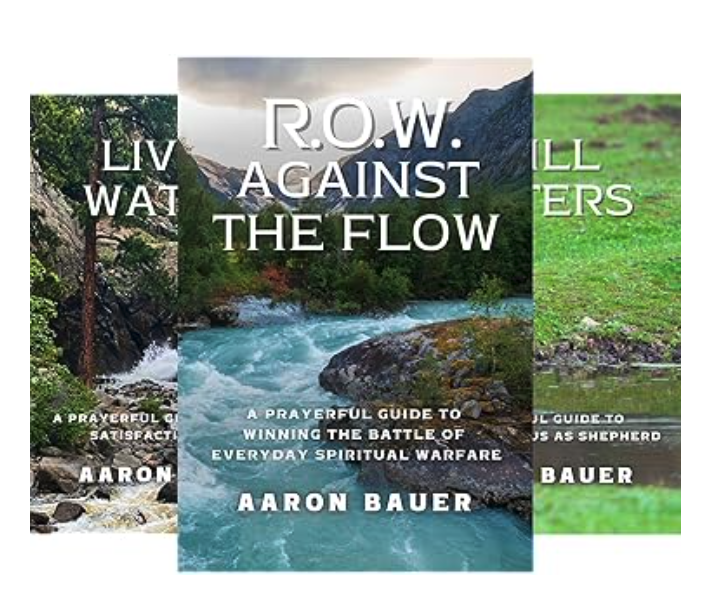
this is a preview photo of the book series

Chapter 3: The Practice of Repentance

Welcome to Chapter 3 of ROW Against the FlowThe Practice of Repentance. This week, we’re exploring how repentance isn’t just a one-time act, but an ongoing, life-giving practice—a rhythm that brings us back to God over and over, freeing us from shame and opening us to grace.

Chapter Focus: Repentance as a Lifestyle

In this chapter, we look at repentance as the invitation to turn back to God, not out of guilt or legalism, but because of His kindness and the promise of new life. We discover:

  • Repentance is an act of trust, not punishment—God welcomes us every time we turn toward Him.
  • Unbelief is often the root of our struggles. When we believe lies about God or ourselves, our hearts wander—but repentance realigns us with truth.
  • True repentance brings freedom: instead of hiding our mistakes, we bring them to Jesus (“Lord, I need you”), and He covers us with forgiveness and hope.
  • The daily practice of turning back—rather than running away—keeps our hearts soft and our lives aligned with God’s love.

You’ll find stories, biblical encouragement, and practical steps to help you embrace repentance, not as a chore, but as a blessing.

Let’s Talk: Conversation Prompts

After reading Chapter 3, let’s share and reflect:

  • What holds you back from practicing repentance regularly?
  • Can you remember a time when turning back to God brought you unexpected relief or freedom?
  • How does it shift your perspective to see repentance as an act of trust, rather than something to dread?
  • Where might God be inviting you to repentance—big or small—this week?

You’re welcome to answer one, several, or simply offer your personal takeaway. Your honesty could bless and encourage others!

What’s Next?

  • Read ahead: The full PDF is available if you want to keep going, or come back next week for Chapter 4.
  • Invite a friend: These chapters are great for group or individual reflection—who might you invite into the journey?
  • Stay connected: We’ll keep working through practical, encouraging ways to ROW against the flow, together.

Thank you for pressing into grace and growth. Let’s help each other walk this road—one honest step at a time.

Chapter 3: Disaster in Paradise

In 2015, I led a group of middle schoolers on a white water rafting trip. We were on the Deschutes river, in Eastern Oregon, enjoying our paddle when the rafts went over a waterfall. Most rafts did fine but one raft circled back toward the waterfall. The rest of us caught the current to go down stream and had all the paddling power our raft guide needed to keep us safe. This group of particularly small middle school girls struggled mightily against the circular vortex and one by one the waterfall would unseat the girls and sweep them down the river. Only now does it seem at all humorous and I was certainly glad the company required that every participant wore a helmet. In chapter one, we talked about our life choices that keeps circling us around and picking us off. We just don’t have the power we think to be able to get out of the whirlpool.

This adventure isn’t just a fun story – it’s a perfect picture of our struggle with sin. Just like those girls caught in the whirlpool, we often find ourselves trapped in cycles of bad choices, unable to break free on our own.

We think we have the power to paddle out, but the current of sin is stronger than we realize. 

Have you ever watched a friend get sucked into this whirlpool of sin? Maybe they’re a Christian, maybe not, but you can see them spiraling deeper into captivity. It reminds me of something my pastor used to say: “Sin takes you further than you want to go, keeps you longer than you want to stay, and costs you far more than you want to pay.” I’ve seen this play out countless times in people’s lives, including my own.

In this chapter, we’ll explore the origins of our spiritual battle, tracing it back to the Garden of Eden. We’ll examine how the fall of humanity has affected our relationship with God and our susceptibility to sin, setting the stage for the ongoing spiritual warfare we face today.

The Garden of Eden Story and Its Implications

In the beginning, God created a perfect world and placed humans in a garden paradise. Adam and Eve enjoyed unbroken fellowship with God and had the freedom to choose within the boundaries He set. However, this idyllic situation didn’t last.

Now the serpent was more shrewd than any of the wild animals that the Lord God had made. He said to the woman, “Is it really true that God said, ‘You must not eat from any tree of the orchard’?” The woman said to the serpent, “We may eat of the fruit from the trees of the orchard; but concerning the fruit of the tree that is in the middle of the orchard God said, ‘You must not eat from it, and you must not touch it, or else you will die.’ ” The serpent said to the woman, “Surely you will not die, for God knows that when you eat from it your eyes will open and you will be like divine beings who know good and evil.” When the woman saw that the tree produced fruit that was good for food, was attractive to the eye, and was desirable for making one wise, she took some of its fruit and ate it. She also gave some of it to her husband who was with her, and he ate it. Then the eyes of both of them opened, and they knew they were naked; so they sewed fig leaves together and made coverings for themselves. — Genesis 3:1-7

The serpent, representing Satan, approached Eve with a cunning question: “Did God really say, ‘You must not eat from any tree of the orchard’?” This simple question planted seeds of doubt about God’s goodness and His intentions.

The enemy’s tactic hasn’t changed much since then – he still tries to make us question God’s character and commands. As if to say, “God is holding out on you and He doesn’t have your best interests in mind. If you want something you have to reach out and take it.”

Eve’s response revealed that she knew God’s instruction, but the serpent twisted the truth, promising that eating the forbidden fruit would make them “like God.” This appeal to their desire for autonomy – to be their own gods – proved too tempting to resist.

When Adam and Eve ate the fruit, their eyes were opened, but not in the way they expected. They became aware of their nakedness, symbolizing their new vulnerability and separation from God. This act of disobedience introduced death to humanity and sin into the world, with far-reaching consequences for all of creation.

The Progression of Sin

The disaster in Eden set in motion a progression of sin that affects us all. James describes this process:

But each one is tempted when he is lured and enticed by his own desires. Then when desire conceives, it gives birth to sin, and when sin is full grown, it gives birth to death. Do not be led astray, my dear brothers and sisters. — James 1:14-16

This progression often follows a pattern:

  1. Temptation: We encounter an opportunity to disobey God.
  2. Desire: Our internal longing for something contrary to God’s will grows.
  3. Action: We give in to the temptation and commit sin.
  4. Death: Sin leads to spiritual death and separation from God.

Understanding this progression can help us identify and interrupt the cycle before it leads to sin and its consequences.

The Eternal Trajectory

Everyone has a trajectory and we’re learning to let Jesus interrupt that trajectory every day. If it’s not interrupted we’ll continue along with our culture that tells us to look inward for meaning and purpose and fulfillment. 

Those who turn inward also turn downward and that trajectory is eternal. Those who through allegiance to Jesus turn upward to our Creator for identity, purpose, satisfaction also turn outward toward others. That trajectory is also eternal.

Those who love God, love others. Those who trust themselves more than God, worship themselves as a god. Self-worship leads to all kinds of sin attaching us to the enemy of our soul.

  • The Vortex of Idolatry: Just as the raft was caught in a circular vortex, our disordered desires can trap us in a degenerative cycle of idolatry. We keep circling back to the same false gods, unable to break free on our own.
  • Powerlessness Against the Current: We’ve been like the small middle school girls struggling against the vortex in our inability to overcome sin and idolatry through our own strength. We must have Christ’s power to break free from vicious cycles and interrupt our trajectory. 
  • The Danger of Being Unseated: As the waterfall unseated the girls one by one, idolatry can gradually erode our spiritual foundation, eventually causing us to lose our footing in our allegiance to Jesus.
  • The Importance of Protection: The helmets that protected the rafters can represent the spiritual armor we need to guard against the dangers of idolatry and spiritual warfare. 

Practical Application: R.O.W. in Action

Repent: 

  • Acknowledge areas where you’ve sought autonomy from God or turned to modern idols.
  • Confess your tendency to doubt God’s goodness or question His commands.

Obey:

  • Identify one area where you can actively submit to God’s authority today. Write it down.
  • Choose a modern idol in your life and take a concrete step to dethrone it.

Worship:

  • Thank God for His perfect design and the freedom He gives within His boundaries.
  • Praise God for His patience and love, even when we fall short.

Conclusion

The disaster in Eden may have occurred long ago, but its effects continue to shape our spiritual reality today. By understanding the progression of sin and recognizing modern forms of idolatry, we can better equip ourselves for the spiritual battles we face. Remember, while the consequences of human rebellion are severe, they are not the end of the story. God’s redemptive plan, which we will explore in the next chapter, offers hope and restoration.

Reflection

  1. How do you see the pattern of temptation described in James 1:14-16 playing out in your own life?
  2. What are some subtle forms of idolatry you’ve noticed in your own heart or in the culture around you?
  3. How can understanding the fall and its consequences help you in your daily spiritual battles?
  4. The chapter uses the rafting analogy to emphasize our powerlessness against the current of sin. What specific cycles of bad choices or idolatry do you feel caught in, and how does recognizing your inability to “paddle out” motivate you to rely on Christ’s power?
  5. The enemy’s tactic in Eden was to make humans question God’s intentions, saying, “God is holding out on you.” Where in your life are you currently tempted to believe that God is holding out on you, and how can you counter this deception with truth?
  6. The chapter discusses an “eternal trajectory.” How can you ensure your daily choices reflect a trajectory that is “upward” (toward God) and “outward” (toward others), rather than an “inward” or “downward” trajectory of self-worship?
  7. What is one thing you’ll do this week to stop the Trajectory of Sin in your life?

Prayer Focus

Heavenly Father, we come before You humbled by the reality of our fallen nature and the consequences of sin in our world. We acknowledge our tendency to doubt Your goodness and seek autonomy from Your perfect will.

Lord, give us discernment to recognize the progression of sin in our lives. Help us to identify temptation early and turn to You for strength to resist. Open our eyes to see the subtle idols we’ve allowed to take root in our hearts.

We confess our disordered desires and ask for Your help in reordering our loves and our lives. Teach us to worship You alone, dethroning any false gods we’ve elevated in our lives. 

Grant us the courage to submit to Your authority in every area of our lives. When the current of culture pulls us away from You, give us the strength to ROW against the flow.

Thank You for Your patience with us and for Your redemptive plan that offers hope even in the face of our failures. Help us to live in light of this hope, fighting our daily spiritual battles with the confidence that You are with us and for us 

We pray for wisdom to recognize the world, the flesh, and the devil at work in our lives. Give us discernment to see beyond surface-level temptations to the deeper idolatries of our hearts.

Father, we ask for Your protection against the spiritual forces that seek to exploit our weaknesses. Strengthen our resolve to resist the enemy’s schemes and to cling to Your truth.

Help us to be honest with ourselves and with trusted brothers and sisters in Christ about our struggles. Give us the humility to confess our sins and the faith to believe in Your forgiveness and cleansing power.

Lord, we pray for a renewed mind that sees the world as You see it. Transform our desires so that we long for You above all else. May our hearts be satisfied in You alone.

Finally, we ask that You would use our understanding of the fall and its consequences to make us more compassionate towards others who are caught in sin’s grip. Let our lives be a testimony to Your redeeming grace.

In Jesus’ name, Amen.

Get the Spiritual Formation Series on Amazon

The complete series is available in both Kindle and Paperback editions. Buy on Amazon Available worldwide. Choose your preferred format on the Amazon page.
this is a preview photo of the book series

Chapter 2: Recognizing the Battle

Join the Conversation

Welcome to Chapter 2 of ROW Against the FlowRecognizing the Battle. This week, we’re digging into the reality of spiritual warfare—not as something distant or dramatic, but as a daily, often subtle, part of our lives.

Chapter Focus: Becoming Aware of the Unseen

In this chapter, we explore how spiritual battles aren’t just epic showdowns—they’re the everyday struggles, doubts, temptations, and discouragements that can quietly shape our decisions and relationships. We look at:

  • How the enemy’s schemes often go unnoticed in our routines
  • The importance of recognizing spiritual battles in daily life
  • Practical signs: persistent temptations, discouragement, confusion, and relational conflict
  • The power of awareness and preparation—like gearing up for a hike, knowing what you’re facing changes how you prepare

You’ll also find honest stories, biblical insights, and practical steps to help you identify and respond to these challenges.

Let’s Discuss: Conversation Starters

I’d love to hear your thoughts and stories. After reading Chapter 2, consider sharing in the comments:

  • Have you ever realized you were in a spiritual battle only after the fact? What gave it away?
  • Which “signs” of spiritual warfare—temptation, discouragement, confusion, relational conflict—do you most often notice in your life?
  • How do you prepare yourself spiritually for the “storms” or challenges you face?
  • What helps you stay alert to the enemy’s schemes without becoming fearful or overwhelmed?

Feel free to answer any of these, or simply reflect on what stood out to you in this chapter. Your perspective can encourage others on the journey!

What’s Next?

  • Read ahead: The full PDF is available if you want to keep going, or come back next week for Chapter 3.
  • Invite someone: These posts are designed for group or personal reflection—consider inviting a friend to join you.
  • Stay engaged: Each week, we’ll continue exploring practical ways to ROW against the flow, with prompts for honest conversation and prayer.

Thank you for being part of this journey. Your voice matters—let’s encourage one another as we grow in awareness and freedom together.

Chapter 2 – Recognizing the Battle

It was May 2024 and my friend Weston and I had planned a hike starting at significant altitude, but going even higher to Mason Lake in the Cascade Mountains of the Pacific Northwest. The forecast that week called for 85° in the lowlands. As we started hiking up the trail it began to snow on us. Thankfully, I was warm from exertion, but the further we went up the more we encountered snow on the ground. By the time we got to the lake, we might as well have been in the dead of winter with a frozen lake. When we stopped to eat our lunch, the layers I brought could barely keep up with the cold. 

How might we have prepared if we were expecting to go into the snow? In Finland, they say there is no bad weather; there is only bad gear. But don’t you need to know what you’re facing in order to gear up? We need to be much more like prepared wilderness trekkers than day hikers. We’ve got to realize we are in a storm, a spiritual battle.

In the hustle and bustle of our daily lives, it’s easy to overlook the unseen forces at work around us. We navigate through our routines, face our challenges, and celebrate our victories, often unaware that we’re participants in a cosmic struggle that has been raging since the dawn of creation. This chapter aims to open your eyes to the reality of spiritual warfare and equip you with the knowledge to recognize the battle in your everyday life.

The Reality of Unseen Forces

The Apostle Paul says something that has often intrigued me.

But if anyone has caused sadness, he has not saddened me alone, but to some extent (not to exaggerate) he has saddened all of you as well. This punishment on such an individual by the majority is enough for him, so that now instead you should rather forgive and comfort him. This will keep him from being overwhelmed by excessive grief to the point of despair.Therefore I urge you to reaffirm your love for him.For this reason also I wrote you: to test you to see if you are obedient in everything. If you forgive anyone for anything, I also forgive him—for indeed what I have forgiven (if I have forgiven anything) I did so for you in the presence of Christ, so that we may not be exploited by Satan (for we are not ignorant of his schemes). — 2 Corinthians 2:5–11

In the last verse he suggests that we are not unaware of the devil’s schemes. How many of us could say that? I find that we are often completely unaware that the enemy has schemes against us and he’s plotting the destruction of those that God loves. 

In this passage Paul encourages the church to offer forgiveness to a person so they do not go into excessive sorrow and spiral down into the trap that the enemy has set. How often has that been your situation? It starts out as repetitive or major offense and then you start to spiral down and think that you have to beat yourself up in order to show that you are taking your sin seriously. 

When we are beating ourselves up, we are not treating sin the way God sees it. King David would challenge you that if you don’t confess your rebellion you will indeed break apart from the inside out, but that when you confess you find freedom. Listen in on his confession:

Have mercy on me, O God, because of your loyal love! Because of your great compassion, wipe away my rebellious acts! Wash away my wrongdoing! Cleanse me of my sin! For I am aware of my rebellious acts; I am forever conscious of my sin. Against you—you above all—I have sinned; I have done what is evil in your sight. So you are just when you confront me; you are right when you condemn me. — Psalm 51:1-4

One of the main schemes of the devil is unforgiveness. Demons are unforgiven and unforgiving. This is one of their trickiest weapons against us. 

King David rightly understands his major sin (adultery with Bathsheba and murder of her husband after trying to cover it up) as against God. How many times have you said, “I know God has forgiven me but I cannot forgive myself?” Do you see the subtle scheme of the enemy here? God Almighty has offered to cleanse you from your sin and unrighteousness but you maintain the right to beat yourself up over it. It’s like we are saying that God’s level of purity is, of course, 10 out of 10 and so he can forgive us but ours is more like 20 out of 10. We elevate ourselves above God. This is subtle but it goes right back to the garden of Eden where we decide what is right and what is wrong. 

Paul also reminds us that while it looks like we have human enemies we are not to engage battle with them.

For our struggle is not against flesh and blood, but against the rulers, against the powers, against the world rulers of this darkness, against the spiritual forces of evil in the heavens. — Ephesians 6:12

This verse unveils a profound truth: there’s more to our world than what meets the eye.

These unseen forces are not mere abstractions or metaphors. They are real spiritual entities that actively work to influence our thoughts, decisions, and actions. Just as we can’t see the wind but can observe its effects, we can discern the presence of these spiritual forces by their impact on our lives and the world around us.

Identifying Spiritual Battles in Everyday Life

One way to begin to identify the battles is through journaling and confession to others. This exposes our hidden beliefs and shows us where we consistently struggle. So how do we recognize these spiritual battles in our daily lives? Here are some signs to watch for:

  • Persistent temptations: When you find yourself continually drawn to things you know are wrong, it’s often a sign of spiritual attack.
  • Doubt and confusion: If you’re suddenly questioning truths about God that you once held firmly, the enemy may be at work.
  • Discouragement and despair: Feelings of hopelessness, especially about your faith, can be a tactic of the enemy.
  • Distractions from spiritual disciplines: When you find it unusually difficult to pray, read the Bible, or fellowship with other believers, it could be spiritual opposition.
  • Conflict in relationships: While not all conflict is spiritual in nature, persistent strife, especially among believers, can be a sign of the enemy’s work.

The Importance of Awareness

One day in my senior year of high school, I was walking down the hallway from the locker room in the gym. An enraged classmate confronted me with a highly flexible kick to my face. To this day, I have no idea why he was upset with me, but it could have been something I said or did in PE class. Again, if you don’t know you’re in a fight it’s really hard to prepare for it. 

Recognizing that we’re in a battle is the first step toward victory. When we’re aware of the spiritual nature of our struggles, we can respond appropriately. Instead of relying on our own strength or worldly solutions, we can turn to God, utilize the spiritual weapons He’s given us, and stand firm in the faith.

Learning to R.O.W.

Repent: What lies have you been believing about God or yourself? 

Obey: Obey the Gospel – What is true about Jesus? What is true about you because He has your allegiance?

Worship: Give God the honor and praise He deserves

As we learn to recognize the battle and implement the R.O.W. principle, we’ll be better equipped to stand firm against the enemy’s schemes and live out our faith with courage and conviction.

Conclusion

As we close this chapter, I want to offer you another metaphor. The demonic temptations and pestering is a lot like mosquitoes. When we’re hiking on the trail sometimes we come across areas where they just swarm. Just keep hiking. This is probably not the place to set up camp is it? There are swamps we can avoid to stay away from the pestering, right? 

To close, here’s another metaphor: demonic temptations are like mosquitoes. Sometimes you hit a swarm—just keep hiking. Don’t set up camp in the swamps where they gather. The spiritual battle is real, and it’s happening all around us. But remember, 

You are from God, little children, and have conquered them, because the one who is in you is greater than the one who is in the world. — 1 John 4:4

As we move forward, we’ll explore deeper aspects of this battle and learn practical strategies for victory. The journey ahead may be challenging, but with awareness, faith, and the tools God has given us, we can navigate these waters successfully.

Have you started to understand the battle, the current, and to ROW against the flow?

Reflection

  1. Can you recall a time when you were caught unprepared for a challenging situation, similar to the hiking story? How might this relate to spiritual preparedness?
  2. In what areas of your life do you find it most difficult to recognize spiritual battles? Why do you think this is?
  3. Of the five signs of spiritual battles mentioned (persistent temptations, doubt and confusion, discouragement and despair, distractions from spiritual disciplines, and conflict in relationships), which do you encounter most often? How can you be more aware of these in your daily life?
  4. How might journaling and confession to others help you identify hidden beliefs and consistent struggles in your spiritual life?
  5. Think about a recent struggle you’ve faced. Looking back, can you see any signs that it may have been a spiritual battle? How might you approach a similar situation differently in the future?
  6. Are there certain swamps you can avoid easily to stay away from the mosquitoes? 

Prayer Focus

Heavenly Father, we thank You for the truth of Your Word that reminds us of the unseen spiritual realities around us. We ask for Your wisdom and discernment to recognize the spiritual battles in our daily lives. Open our eyes to see beyond the physical realm and grant us the courage to face these challenges with faith.

Lord, help us to be vigilant and aware of the enemy’s tactics. Strengthen us to resist temptation, doubt, and discouragement. Guide us in maintaining strong spiritual disciplines and healthy relationships.

We pray for the discipline to journal and the courage to confess to others, that we might expose hidden beliefs and consistent struggles. Help us to apply the R.O.W. principle – to Repent of the lies we’ve believed, to Obey the truth of the Gospel, and to Worship You in all circumstances.

Thank You for the assurance that greater is He that is in us than he that is in the world. May we walk in this truth daily. In Jesus’ name, Amen.

Get the Spiritual Formation Series on Amazon

The complete series is available in both Kindle and Paperback editions. Buy on Amazon Available worldwide. Choose your preferred format on the Amazon page.

this is a preview photo of the book series

Chapter 1: The R.O.W. Principle

Let’s Begin the Conversation

Welcome to the first chapter of our journey through ROW Against the Flow. I’m excited to dive in with you and invite honest reflection, real dialogue, and shared growth.

Chapter Focus: The R.O.W. Principle

This chapter introduces the R.O.W. principle—Repent, Obey, Worship—as a practical, biblical framework for navigating the currents of spiritual warfare in everyday life. Through stories, scripture, and down-to-earth examples, we’ll explore how to:

  • Recognize the unseen battles that shape our days
  • Turn from distractions and idols to realign with Jesus
  • Build a rhythm of repentance, obedience, and worship that keeps our hearts open to God’s work

You’ll find analogies (like the Brazilian steakhouse!), practical steps, and reflection questions to help you put these ideas into practice—whether you’re reading on your own or with a group.

Let’s Talk: Conversation Starters

I’d love for this space to become a place of honest conversation and encouragement. After reading Chapter 1, consider sharing your thoughts in the comments:

  • Where do you notice yourself “drifting” or needing to “ROW against the flow” in daily life?
  • What does it look like for you to keep your “green light” on for Jesus?
  • Which part of the R.O.W. principle—Repent, Obey, or Worship—feels most challenging or most life-giving right now?
  • How have you experienced the need for repetitive reliance on Jesus, especially when you’re tempted to believe He’s “tired” of your repentance?

Feel free to answer one question, all of them, or just share what stood out to you. Your story and perspective matter here.

What’s Next?

  • Download the full book or follow along weekly: If you want to read ahead, the full PDF is available for free. Otherwise, check back next week for Chapter 2.
  • Invite a friend: These chapters are designed for group discussion—consider inviting someone to read and reflect with you.
  • Stay tuned: Each week, we’ll explore a new chapter, with prompts for reflection and prayer.

Thank you for joining the journey. I’m looking forward to hearing your thoughts, questions, and stories as we ROW against the flow together. Let’s encourage one another as we seek deeper freedom and joy in Christ.

Chapter 1 – The R.O.W. Principle

Have you ever been to a Brazilian steakhouse where they serve you all the meat you can eat? If not, let me describe it for you and those who have been to one can cheer me on. My friend, Fuego treated me to a night at one of these restaurants and I quickly found it was hard to keep up with the servers. They walk around with sword-like skewers of all kinds of beautiful aromatic meat and offer it to guests. At this restaurant, they had a small paper sign that they put on your table, and with it you could indicate whether or not you wanted them to stop by and offer you meat. When your sign was flipped to the red side up, that meant you did not want to be offered any meat. When you turned it over to green, you were asking them to come and present their wares. Now, listen here, I am 6’4” tall and weigh about 220 pounds and I do not back down from any challenge. My goal was to keep that green side up and eat as fast as possible. I did not eat everything offered but I made a huge effort to get Fuego’s money worth.

I want you to consider with me the way Jesus offers His life and freedom to you. Do you have your green sign on display? Is your YES on the table? 

My goal since Christ got hold of me at age 18 has been to keep my YES on the table. “Jesus, you have the green light, I am yours, and I want the freedom that you offer. You are the way the truth and the life.” In a world, where the Spirit of God is searching the world for those who would worship Him in spirit and in truth, imagine Jesus walking around looking for those who would respond to Him. I want to be the place He stops and serves me. Is that your desire? Maybe, you are hoping that He stops at somebody else’s table?

Now the analogy certainly breaks down. It might not take uncommon imagination to guess that I did not feel well after that steakhouse experience. I won’t go into too much detail about meat sweats or the sounds my body made to attempt to digest all that meat. And of course, gluttony is not close to godliness so there’s another strike against me. 

But Jesus is a proper feast isn’t He? Isn’t He? 

Have you believed anything different? I know you have heard the whispers that He is holding out on you; that He doesn’t have your best interests at heart. Keep exploring with me as I show you a way to stay current with Jesus when everything is pulling against it. This is everyday spiritual warfare.

I want to offer you a practical framework I created for living out our faith daily: the R.O.W. principle. This simple yet powerful concept will help you navigate the currents of spiritual warfare and maintain the freedom King Jesus won for you. 

He deserves our worship but we often get distracted and end up worshipping at the wrong altar.

Understanding R.O.W.

R – Repent: Turning away from sin and idolatry

Therefore repent and turn back so that your sins may be wiped out, so that times of refreshing may come from the presence of the Lord, and so that he may send the Messiah appointed for you—that is, Jesus. — Acts 3:19-20

Repentance is more than feeling sorry for offending God. It’s a decisive turn away from sin and toward God. It involves recognizing our wrongdoing, confessing it to God, and making a conscious decision to change our direction. To confess a sin means you agree that it was indeed rebellion.

O – Obey: Obey the Gospel – Jesus the resurrected Messiah of Israel is true Lord of the world.

“If you love me, you will obey my commandments.Then I will ask the Father, and he will give you another Advocate to be with you forever—the Spirit of truth, whom the world cannot accept, because it does not see him or know him. But you know him, because he resides with you and will be in you.” — John 14:15-17

Obedience is the natural outflow of our love for Christ. It’s not about following rules to earn God’s favor, but rather aligning our will with His out of trust and devotion.

W – Worship: Turn your eyes upon Jesus

Therefore I exhort you, brothers and sisters, by the mercies of God, to present your bodies as a sacrifice—alive, holy, and pleasing to God—which is your reasonable service. — Romans 12:1

Worship is more than singing songs on Sunday. It’s a lifestyle of honoring God in everything we do, recognizing His worth and responding with our whole lives.

So how do we keep worshiping Jesus in the midst of everything going on in life. How do we keep our eyes on Jesus and believe the truth of the gospel that Jesus the Christ is the true Lord of the world?

Often times when I meet somebody new, I tried to describe my work without using the word, Pastor. “I lead a group of people in my city who are trying to take seriously the claims of Jesus because if he is who he says he is, we have a lot of explaining to do.” If they give me a half second, I’ll say “because through his life, death, resurrection and ascension to the throne of the universe he has been declared Lord of ALL”

Now, do I live every moment recognizing and confessing that Jesus is Lord? Is my YES always on the table? Green Light always on for Jesus? Absolutely not, and so I’ve got to develop a life of repentance. I find myself at the wrong altar multiple times a day. I find that “successism” (the need to succeed to feel worthy) is a very compelling religion and I organize my mood by how others think I’m doing. My emotional life can be very telling about what altar I’ve been worshiping at. So I turn from “successism” and I obey the gospel looking to Christ and the way he was victorious and then worship Jesus. He gives me my identity. He alone tells me if I’m good enough, and because of his sacrifice by his blood, I am made pure and holy, and acceptable to Him.

Applying R.O.W. in Daily Life

The R.O.W. principle is more than just a concept; it’s a dynamic framework for engaging in the spiritual battle. It is how we actively navigate the currents of life and spiritual warfare, ensuring we stay aligned with King Jesus.

Recognizing the Need to R.O.W.

Have you ever found yourself drifting? It’s subtle at first. We often find ourselves pulled off course by the strong currents of our culture, the pressures of daily life, or the pull of our own disordered desires. The R.O.W. principle provides a vital corrective. It helps us recognize when we are off course and offers a clear path to realign ourselves with God’s will and truth. Just as a rower must constantly assess their direction and pull against the stream to reach their destination, R.O.W. helps us counteract the forces that seek to pull us away from Jesus.

The Cycle of R.O.W.

R.O.W. is not a one-time event or a checklist to complete. It is a continuous cycle—a rhythm of repetitive reliance on Jesus. We may need to engage in this process minute-by-minute, as we encounter various temptations and challenges throughout the day. This consistent practice of repentance, obedience, and worship is essential to maintaining our “green light” for Jesus and ensuring we don’t fall back into old patterns.

R.O.W. in Spiritual Warfare

When we face spiritual attacks, R.O.W. becomes our essential battle strategy, equipping us to stand firm against the enemy’s schemes:

  • Repentance (R): This is our first line of defense. We must immediately and specifically Repent of any footholds we have given the enemy through sin or agreement with lies. Repentance closes the door to spiritual darkness and restores our alignment with God.
  • Obedience (O): We Obey God’s word and stand firm in the authority Christ has given us. Obedience isn’t just about doing the right thing; it’s about actively submitting to the Lordship of Jesus and resisting the enemy’s attempts to undermine our allegiance.
  • Worship (W): Worship is a powerful weapon against the enemy’s lies. By turning our eyes upon Jesus and acknowledging His ultimate worth and victory, we declare our loyalty to Him and defeat the enemy’s attempts to distract us with false gods.

Practical Application

Repent:

  • Practice daily self-examination, asking the Holy Spirit to reveal areas of offense. Don’t let sin linger unconfessed
  • Confess specific sins to God, not just general wrongdoing
  • Make concrete plans to increase alignment with the Creator.

Obey:

  • Study Scripture regularly to align with God’s heart.
  • Start with small acts of obedience to build your “obedience muscles”
  • Seek accountability from trusted Christian friends

Worship:

  • Develop a daily habit of praising God, even in difficult circumstances
  • Look for ways to honor God in your everyday activities
  • Cultivate an attitude of gratitude, recognizing all good things come from God

As a pastor, I’ve spoken with hundreds of people who fear that God is tired of their repentance. They seem to think that they should be embarrassed to come once again about the same offense they were confessing before. Do you find this troubling as well? 

You might think that the occasion for repentance is the worst day of your life. “I’m so ashamed” you say “I am struggling so much with this” you say.

Hear me out! Could it be that it’s not your worst day but in fact your best day? Could it be that Jesus loves you and knows your weakness and is not ashamed of you? Could it be that He is not tired of your repentance, in fact, the repetition of your repentance emphasizes your reliance on Him. This is just reality. This is truth. We ARE reliant on Him! 

So again, could it be that this is the best day of your life where you cry out to Jesus thank Him for forgiving you and restoring the relationship? We need repentance repetition- “Rep Reps” – Developing repetitive reliance on Jesus is an honest path forward even when the enemy whispers that God must be tired of you. Life is Repentance and in Repentance we have Life. Put your YES on the table!

Conclusion

The R.O.W. principle is a powerful tool in our spiritual arsenal. With practice we align ourselves with God’s will and resist the enemy’s attempts to pull us off course. Remember, just as a rower must continually pull against the current to make progress, we too must consistently apply R.O.W. to grow in our faith and stand firm against spiritual attacks. 

This might be a morning exercise or a minute by minute one as the current rages.

Reflection

  1. Drawing on the steakhouse analogy, are you actively keeping your “YES” on the table and your “green light” on for Jesus, or are you hoping He stops at someone else’s table? Explain.
  2. The chapter highlights how easily we can worship at the “wrong altar,” such as “successism.” What specific “altar” (idol) do you find yourself turning to, and how can applying the R.O.W. principle help you recenter your worship on Jesus?
  3. The chapter emphasizes “Rep Reps,” or repetitive reliance on Jesus through repentance. How can embracing the truth that God is not tired of your repentance change your approach to confessing recurring sins?
  4. How can you incorporate the R.O.W. principle into your daily routine?
  5. Think of a recent spiritual struggle. How might applying R.O.W. have helped in that situation?
  6. Which aspect of R.O.W. do you find most challenging? Why?

Prayer Focus

Heavenly Father, As we begin this journey of understanding spiritual warfare, we come before You with humble hearts. We acknowledge our fallen nature and how our sin offends You.

Holy Spirit, examine our relationship with You—are we holding back, or truly worshipping in spirit and in truth? Reveal the Father’s love to us.Jesus, open our eyes to the truth of our condition apart from You. Forgive us for doubting Your goodness and listening to the enemy’s lies.

Thank You, Father, for not abandoning us in our brokenness. Thank You for Your plan of redemption from the very beginning.Holy Spirit, give us discernment to recognize brokenness in ourselves and the world.

Lord Jesus, thank You for breaking the power of sin and death. Help us grasp the freedom You won for us on the cross.Give us strength to resist temptation and stand firm in Your truth. Protect us from spiritual forces that seek to exploit our weaknesses.As we learn about spiritual warfare, give us courage and hope in Your presence and power.Teach us to apply the R.O.W. principle daily. Help us to repent, obey, and worship You alone.

We pray all this in the mighty name of Jesus, who has overcome sin and death. Amen.

    Get the Spiritual Formation Series on Amazon

    The complete series is available in both Kindle and Paperback editions. Buy on Amazon

    Available worldwide. Choose your preferred format on the Amazon page.

    this is a preview photo of the book series

    Join the Journey — Free Spiritual Formation Series and Weekly Community

    After much thought and feedback, I’m excited to announce a new way to engage with the Spiritual Formation Series! Not only can you download all three books as free PDFs, but we’ll also be exploring the content together, one chapter at a time, each week right here on the blog. There is one more in the works. My hope is to foster a rhythm of reflection, conversation, and growth — and you’re invited to participate, share, and bring others along.

    Here’s What’s New

    • Free Downloads: All books in the Spiritual Formation Series are available as PDFs for you to download, read, and share freely.
    • Weekly Chapter Journey: Each week, I’ll post a new chapter from the series, along with prompts for reflection and group discussion. Whether you’re reading solo or gathering friends at home or a coffee shop, you can join in at your own pace.
    • Active Participation: I encourage you to leave comments, share your insights, and invite others to join the conversation. Let’s build a community that supports one another on the journey.

    How to Get Involved

    • Download the Books: Grab the PDFs right here on the site (see below for details on how to access them).
    • Subscribe or Check Back Weekly: Follow along as we release a new chapter each week. Use the prompts for personal journaling or spark conversations in your group.
    • Share and Invite: Know someone who would benefit? Pass along the blog, the PDFs, or invite them to join your group.

    Download ROW Against the Flow

    Download Living Waters

    Download Still Waters

    Get the Spiritual Formation Series on Amazon

    The complete series is available in both Kindle and Paperback editions. Buy on Amazon

    Available worldwide. Choose your preferred format on the Amazon page.