In Matthew 7:12-29, we have reached the end of the first set of Jesus’ teachings. He does not let his hearers off easy. Not in the slightest. He requires that hearers must be doers and the doers must be open to the way of Jesus. Jesus is not searching for adherence to principles, but hearts ready to respond with a transformed heart and to live according the Golden Rule.
Graciously, Jesus gives us the heart to follow him, but even that requires us to respond to his gift. “In each of the four basic warnings—two gates and roads (7:13–14), two kinds of prophets (7:15–20), two kinds of disciples (7:21–23), and two foundations (7:24–27)—a choice must be made: Are you with Jesus or against him? There is no middle ground, no other choice, and a decision must be made—a decision with eternal consequences” (Michael J. Wilkins, NIV Application Commentary).

These passages can be troubling because they call out deep fears in us. Are we on the inside or the outside of the kingdom? Remember, he is talking to a mixed crowd of disciples who would be tempted to keep their traditions and foundations built on the the status quo without allowing Jesus to be the fulfillment of all they had learned. Also we are warned that we cannot use Jesus for our own means while relying on another foundation. Check out the message, “Do You Follow? A Warning and A Response” here.
 One of the most dominant views about Christians today is that they are judgmental. According to the Barna Research Group and The Fermi Project (“A New Generation Expresses its Skepticism and Frustration with Christianity,” September 2007), a study of people ages 16–29 in the United States, nearly 90 percent of respondents said that Christians were judgmental in the way they practice their faith. If you are like me you can immediately justify your position and minimize their perception. I might say, “What they are doing is wrong and so they feel God’s judgment and they put it on us.”
 t as God is perfect) and nothing less is acceptable. Jesus’ standard of the new humanity is remarkably pristine and no amount of rationalization will stand up to his scrutiny. At the same time we see Jesus moving toward broken people like us with love and mercy and forgiveness and in his loving atonement we find he is covering for our sin while his kindness leads us to repentance. We are worse off than we imagined and more loved than we dared dream.
 As the kingdom advances, the territory in our hearts becomes his and we have the opportunity to be partners in his kingdom advance.
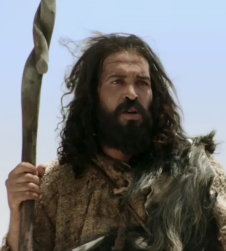 It is hard to imagine the impact of John the Baptist in our culture today. We have street corner “prophets” of a sort today, but they are speaking a foreign spiritual language to those walking by. It is hit or miss, but mostly miss.

 Aaron Bauer